How Much Money Do Students Need at University in 2026?

Starting university is an exciting time in your life, but budgeting and managing your money can feel overwhelming. In addition to your course’s tuition fees, you’ll need to think about rent, food, bills, transport, and enjoying your time at university.
The new UCAS Budget Calculator makes it easier to understand what these costs might look like. By entering a few quick details about your plans, you can get a clearer estimate of your likely living costs, and see what your expected student finance and other income will cover.
No two student budgets will be identical, as your spending will depend on your lifestyle, your course, where you’re studying, and your personal preferences. However, estimating your expenses early on can help you understand your options and prepare for university with confidence.
What is the UCAS Budget Calculator?#
The UCAS Budget Calculator is a free tool that helps you figure out how much you’re likely to spend at university in the UK. It’s designed for both current and prospective students, as well as parents or guardians helping them prepare for their studies.
After signing up or signing in to your UCAS account, you can use the calculator by entering a few details about yourself, where you’re thinking of studying, the type of student accommodation you’re considering, and other important factors. The calculator will then give you estimates for different budget items, including:
- Rent
- Household bills
- Transport
- Food and groceries
- Socialising and other lifestyle costs
You can adjust the figures and add your own expenses, helping you build a monthly student budget that reflects your circumstances more closely.
Your accommodation will normally make up the biggest chunk of your budget, so it’s particularly important to have a realistic idea of how much you’ll spend. The accommodation prices included in the calculator are powered by StudentCrowd data, helping you to see what accommodation could cost based on location and accommodation types, rather than relying on national averages.
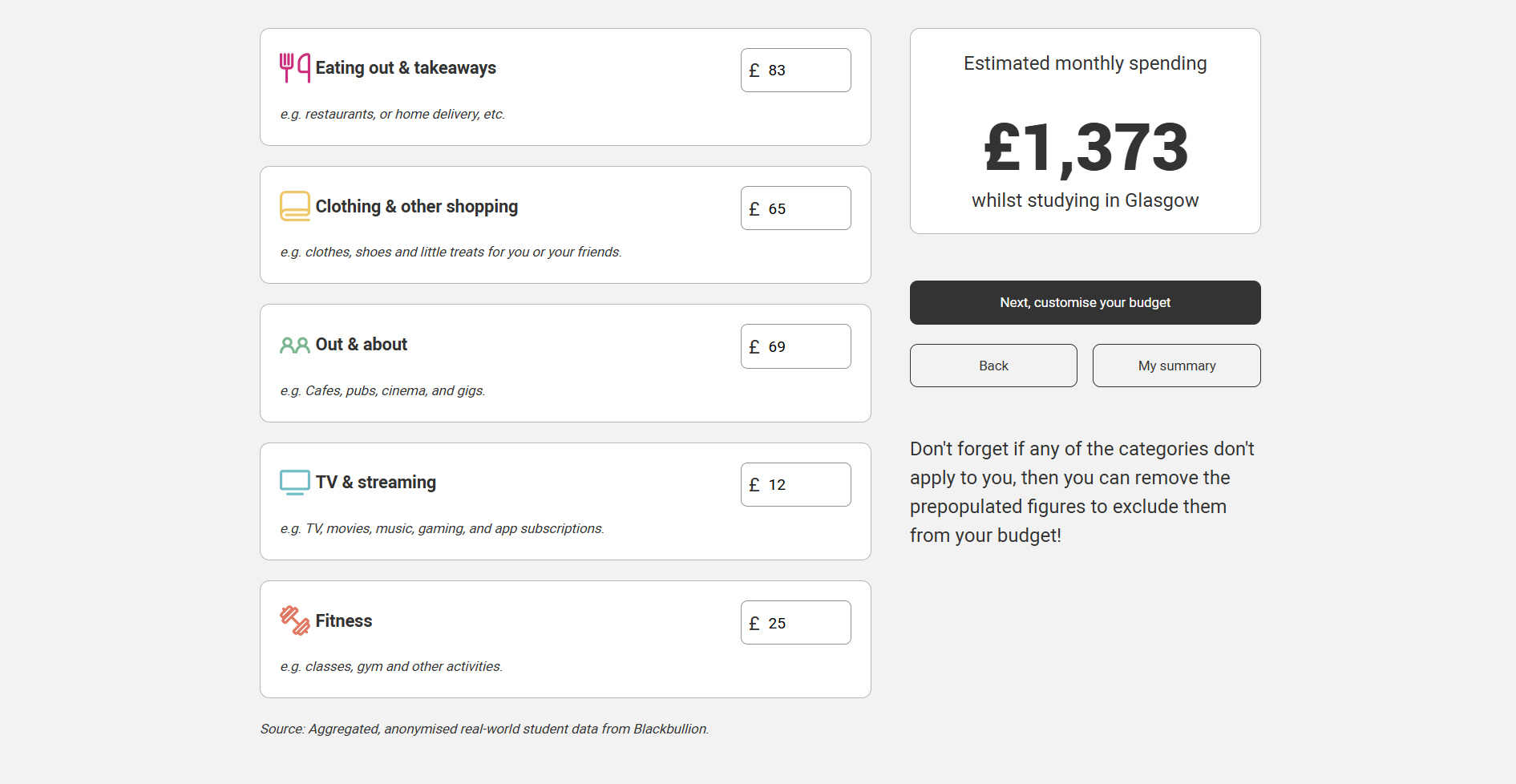
Once you’ve entered your details, the calculator displays your estimated spending for a range of categories. You don’t need to know exactly how much you’ll spend for each category, but this provides a really useful starting point which you can update as your plans become clearer.
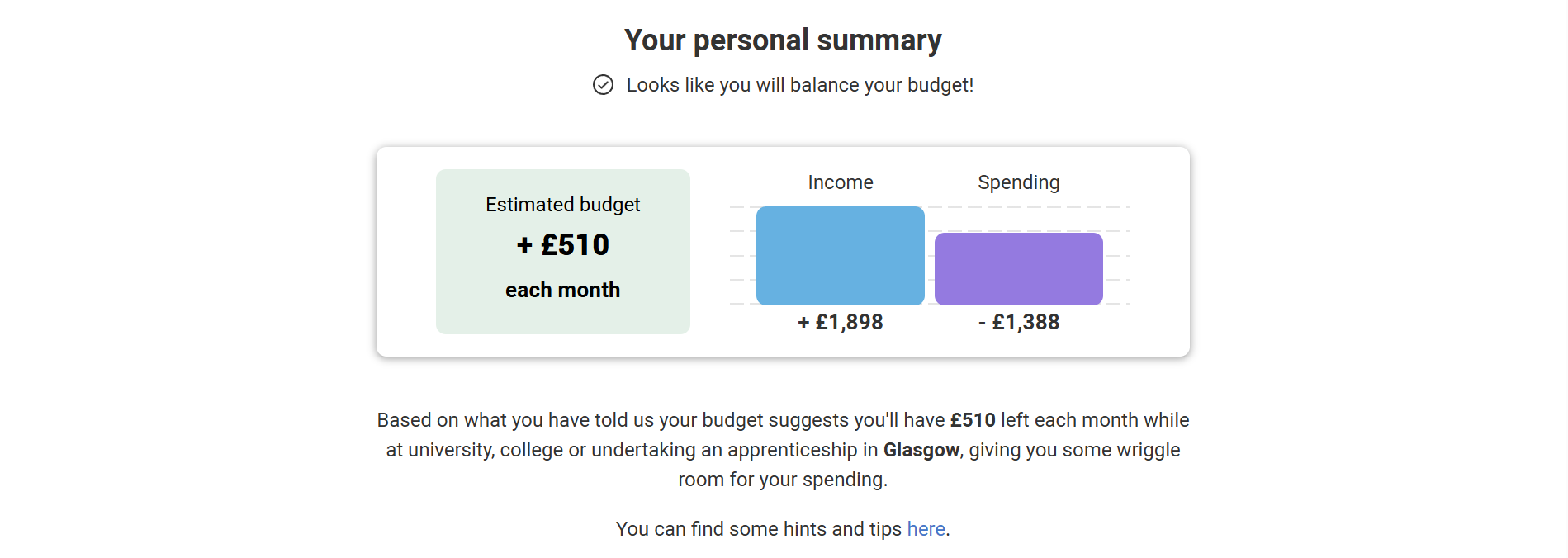
Before you start applying for universities, accepting offers, or finding your accommodation, it’s well worth using the calculator to compare the universities and cities you’re considering. You can also compare the estimate with your maintenance loan, savings and other income, making it easier to understand how far your own budget can realistically stretch.
How much money do students need at university?#
The straightforward answer is that there isn’t one amount or budget that will work for every student. How much money you need depends on where you study, the accommodation you’re comfortable with, and what your day-to-day life looks like.
Firstly, your course can impact your expenses, especially if your course requires regular travel (e.g. for placements) or specialist equipment that isn’t provided by the university. If you choose to live further away from your university campus, you’ll also need to consider the cost of public transport, or petrol and parking if you drive. There are some other questions you need to account for in your budget:
How will your household income affect your Maintenance Loan?#
What financial support is available to you?
Are you planning to work alongside your studies? If so, how many hours will you realistically be able to work?
The best way to estimate your student budget is to break it down into the expenses you know you’ll need to cover, with a little extra for emergencies. For most students, the biggest categories are accommodation, food, transport, course costs, and socialising.
Typical Student Living Costs#
Student Accommodation
Accommodation will normally be the biggest expense in any student’s budget, unless you’re able to live at home throughout your studies. The amount you pay will depend on the city, the type of accommodation you choose, and the location.
For first-year students, university halls are a convenient option, as all bills are included and you’ll have less to think about as you settle into university life. Private halls often offer additional facilities, although prices and locations vary considerably. Sharing a flat or house with other students can also be a cost-effective option, although you’ll need to pay for utilities and broadband separately.
Rooms with shared bathrooms usually cost less than ensuites, while studios tend to be the most expensive option. When comparing prices, check what is included, the length of the tenancy and whether you’ll need to pay a deposit.
Food and Groceries
Your food spending will depend on where you do your grocery shopping, what you typically eat, and how often you eat out or order takeaways. As a rough guide, the 2025 NatWest Student Living Index found that students spent an average of £146.76 per month on groceries, or around £34 per week.
It’s worth noting that you may spend more if you have specific dietary requirements, or need to regularly buy food on campus due to a busy schedule. You can keep food costs down with careful meal planning, cooking in bulk, and choosing own-brand products.
Transport
Transport costs will depend on two main factors: how far you live from your university, and how often you plan on travelling home. You can save money by walking or cycling, but if you live further away, you’ll need to budget for bus or train tickets.
Bear in mind that a cheaper room won’t necessarily save you money if you have to spend a lot on travel to get to your classes, so check local fares before you lock down your accommodation. Also, check out student travel passes and railcards to see how you can save money.
Living at home can save you a significant amount of money (if it’s an option), but you will still need to factor in the cost and time involved in your commute.
Course Costs
Depending on your course, you may need to pay for books, printing, software, equipment or specialist materials.
If you’re studying a practical course, you may need to account for the cost of supplies, while placements and field trips can involve extra spending on travel, clothing or accommodation. Check with your university to see what’s provided before you go out and buy anything, as you may be able to use library copies, access digital resources, or purchase items second-hand.
Social Life
It’s sensible to leave some money in your budget for enjoying university life. Depending on your interests and habits, this might include eating out, nights out, society memberships, sports clubs, gym fees, entertainment and subscriptions.
Your spending will also change throughout the year, with busy periods like freshers’ week costing significantly more. Setting a separate weekly or monthly budget for socialising can help you have fun without sacrificing essentials, although this is arguably the hardest budget item to stick to!
How Living Costs Compare Across the UK#
The cost of living can vary considerably across the UK, and where you study can make a big difference to your student budget. Rent is usually the main reason costs vary, but transport, food and socialising can also be more expensive in some cities than others.
The estimates below from the UCAS Budget Calculator show how much a student could need each month in five popular university cities:
| City | Lower monthly estimate | Higher monthly estimate |
| London (Camden) | £1,641 | £3,779 |
| Manchester | £1,329 | £2,845 |
| Birmingham | £1,066 | £2,347 |
| Leeds | £1,102 | £2,428 |
| Glasgow | £1,182 | £2,056 |
Figures generated using the UCAS Budget Calculator. The lower and higher totals reflect the accommodation price range shown for each location. Accommodation data is powered by StudentCrowd, while other living-cost estimates are powered by Blackbullion. Figures accessed July 2026.
While these figures are a useful starting point, they’re far from a guaranteed monthly total. In reality, your spending is affected by your own lifestyle and personal circumstances. To get a more accurate idea of how far your money will stretch in each city, use the UCAS Budget Calculator to compare your preferred locations while factoring in your personal details. This gives you a fairer comparison and can help you see whether your maintenance loan and other income are likely to cover your costs before you commit to a decision.
Here we’ll look at some examples for a student budget for each of the cities above using the calculator.
London (Camden)#
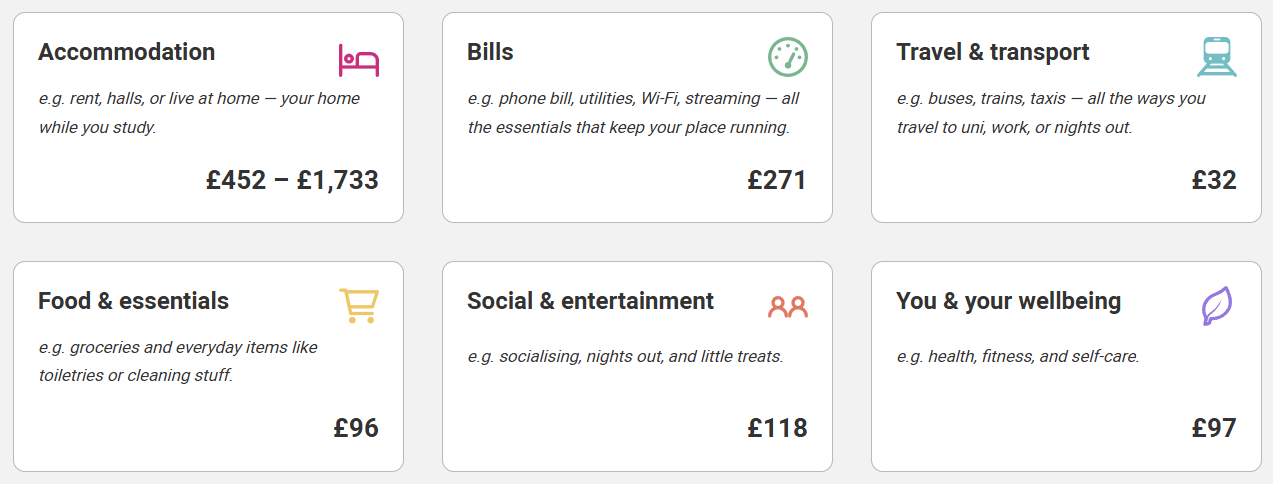
As you might expect, students in London typically spend more on accommodation and transport than in the UK’s smaller cities. However, the calculator shows that other spending categories aren’t far off the other cities in this comparison.
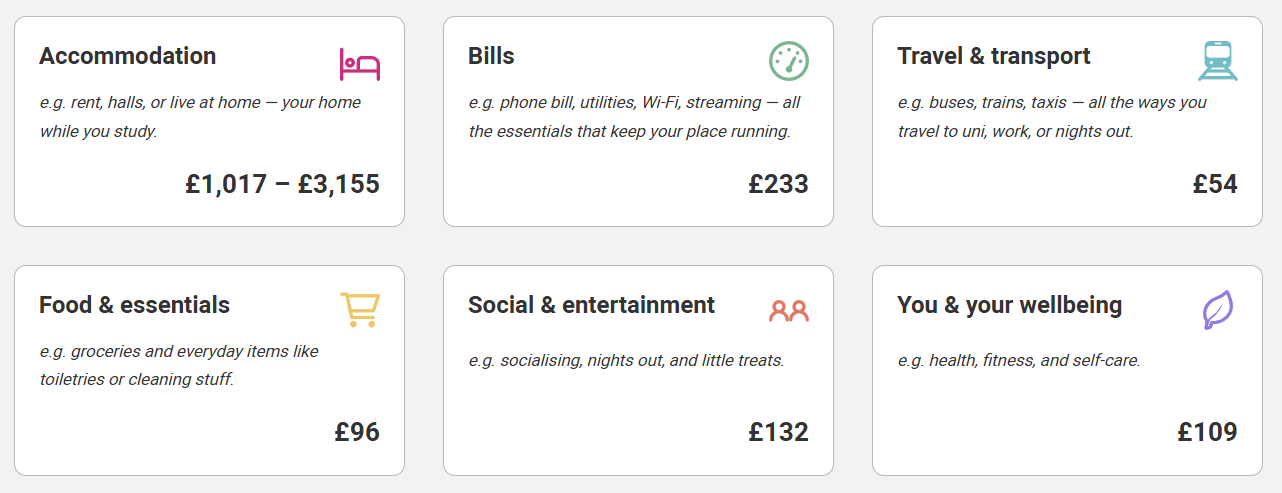
Note that London living costs vary considerably by area. Camden has been used as a central London student benchmark because it is home to several major universities and popular student areas.
Manchester#
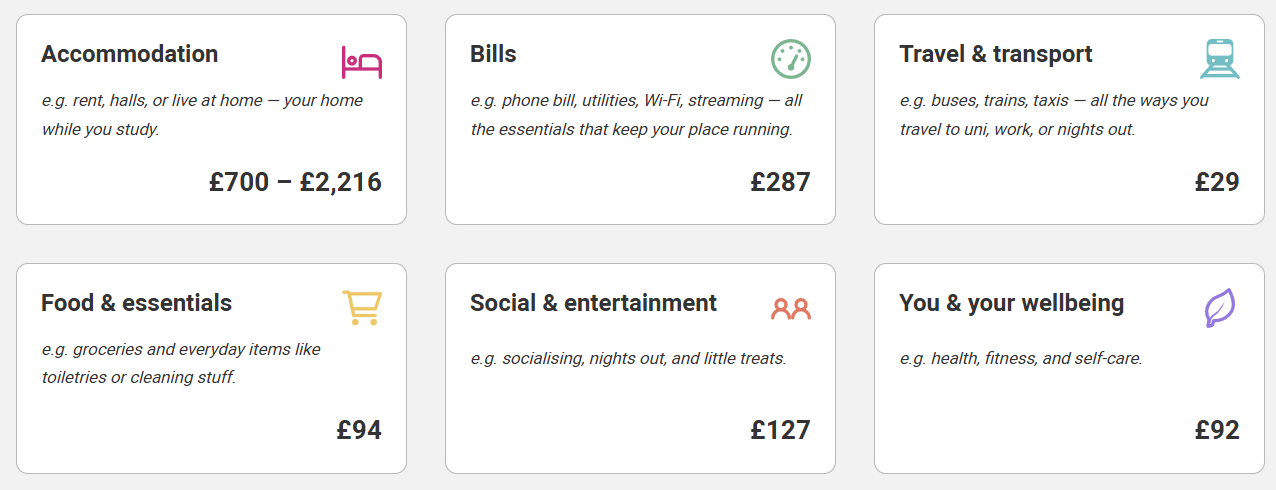
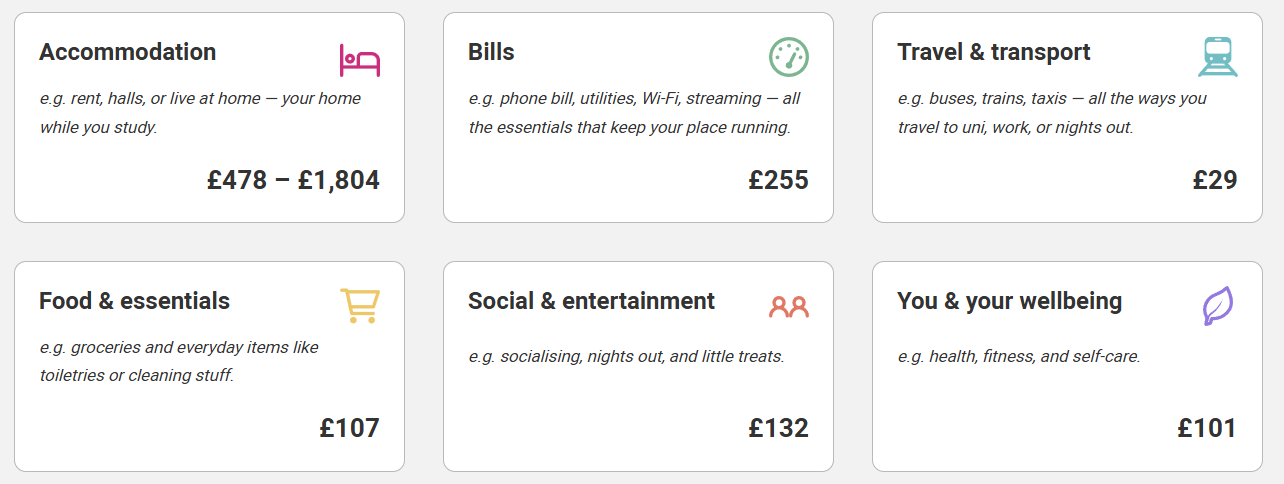
Rent and bills account for a relatively large share of the estimated student budget in Manchester, while other costs are broadly similar to those in the other cities.
Birmingham#
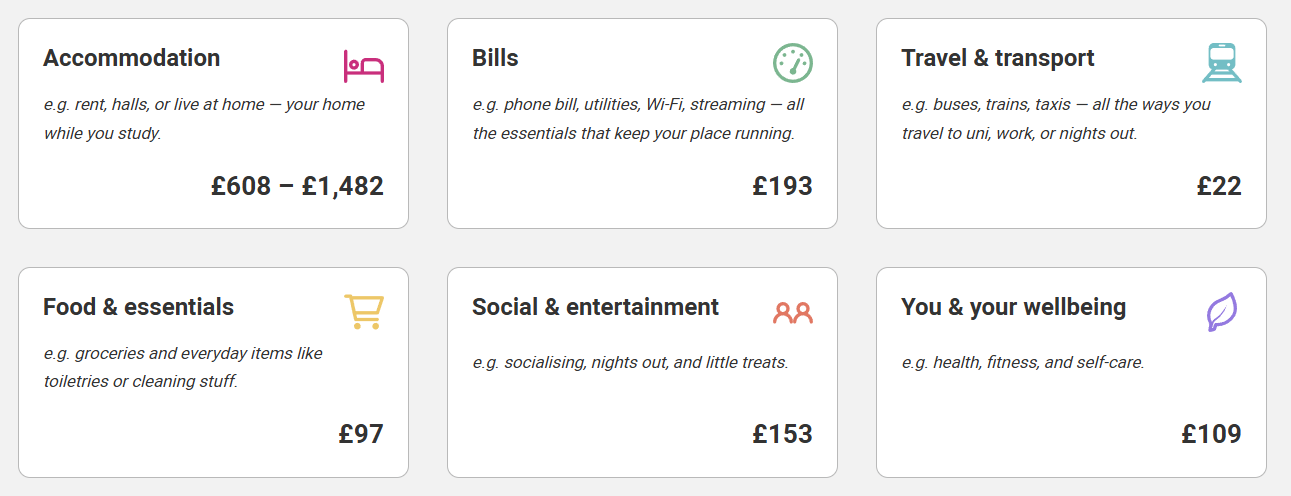
Birmingham offers cheaper accommodation options and nights out than other cities, while other categories are broadly similar. Bills are also on the higher side.
Understanding Student Finance#
Student finance can seem complicated at first, but it’s important to get your head around the money you’ll receive as a student, as this naturally determines how much you’ll be able to spend. As a first step, it’s helpful to separate the money for tuition fees from everyday living expenses.
The figures in this section apply to undergraduate students using Student Finance England for the 2026/27 academic year (Scotland, Wales and Northern Ireland have their own student finance systems). Your eligibility also depends on factors such as your nationality and residency status, so international students should check which support is available to them.
For more up-to-date information, you can also check out our student finance guide.
Tuition Fees and the Tuition Fee Loan
Tuition fees cover the cost of your course, and are paid directly to your university from Student Finance England (so don’t expect this money to show up in your bank account). For the 2026/27 academic year, eligible full-time students in England can apply for a Tuition Fee Loan of up to £9,790. Over the course of a typical three-year undergraduate degree, this means you’ll borrow £29,370 for your tuition costs (if you borrow the full amount each year).
The Tuition Fee Loan is separate from the money you receive for rent, food and other everyday costs.
Maintenance Loan
The Maintenance Loan is designed to help with your everyday expenses as a student, including your accommodation, bills, food, transport, and items such as course textbooks. It’s normally paid directly to your bank account, with one instalment coming at the start of each term. Because it’s paid as a lump sum each term, it’s essential to budget so that your money lasts the entire term.
The amount you’ll receive depends primarily on your household income, and where you live while you’re at university. This means students from lower-income families typically receive larger loans. Whose income is included in the calculation depends on your age, living arrangements and personal circumstances.
For 2026/27, the maximum Maintenance Loan for a new full-time student is:
£9,118 if you live with your parents
£10,830 if you live away from home outside London
£14,135 if you live away from home in London
Note that these are the maximum amounts; if your family has a higher household income, you may receive significantly less than these figures. Even the maximum loan might not be enough to cover your expenses for the academic year, so knowing exactly what you’ll receive will help you create an effective budget.
Repaying Your Student Loan#
As long as you’re still studying, you won’t start paying back either the Tuition Fee Loan or the Maintenance Loan. For most new students from England on Plan 5, repayments only kick in when the new tax year commences and your income is above the repayment threshold.
For the 2026/27 tax year, the threshold is £25,000, and you’ll automatically repay 9% of anything you earn above that amount (not 9% of your entire salary). Your monthly repayments are determined entirely by your income, not the amount you borrowed; if your income drops below the £25,000 threshold, you won’t make any repayments. Note that the threshold can change over time, so check the latest figure when you finish your course.
Other Financial Support#
In addition to loans, there are other types of financial support available. Universities offer a range of bursaries, with eligibility based on personal and financial circumstances, or scholarships linked to academic achievement and potential. Additionally, there may be hardship funds available for students who run into unexpected financial difficulty. In contrast to the loans described in this section, these types of support do not normally need to be repaid.
Disabled Students’ Allowance can also help with additional study-related costs caused by a disability, long-term health condition, mental health condition or specific learning difficulty. Again, this is separate to your main student finance application, but you will need to apply through your Student Finance England account.
When considering which universities to apply for, make sure you check the financial support available, as both the amounts and eligibility requirements can vary.
How to Build a Realistic Student Budget#
A good student budget will give you a good idea of what you can afford, without being so restrictive that sticking to it feels like hard work. Follow these steps to build your own budget:
Work out your guaranteed income: Start by figuring out how much money you’ll have each month, including your maintenance loan, any grants or bursaries, personal savings, or support from your family. You can consider income from part-time jobs if you intend to work alongside your studies, but remember that this isn’t guaranteed.
Estimate your accommodation costs: Rent will normally be your biggest expense, so add this before anything else. When looking at accommodation options, check whether bills are included, and remember to account for deposits or upfront payments. The UCAS Budget Calculator can help you compare accommodation and other living costs in the locations you’re considering, and our accommodation pages can help you find accommodation that fits your budget.
- Cover the essentials: Next, budget for food, bills (if not included), transport, phone costs, and anything you need for your course. Naturally, these need to come before the nice-to-haves, like nights out, takeaways, or subscriptions.
- Set a realistic social budget: Budgeting doesn’t mean cutting out everything fun. Your social life is an important part of the university experience, so set yourself a weekly or monthly amount to cover nights out, exploring the local area, and extracurriculars without spending your rent money.
- Leave room for unexpected costs: While it’s easier said than done, try to keep some money aside for unplanned expenses. If your laptop charger stops working, or you need to travel home unexpectedly, having a small emergency fund can give you peace of mind.
- Track your spending: Making a budget in theory is great, but reality often looks a lot different. Once you start university, make sure you’re actually tracking your spending to see if it lines up with your original budget. Many banking and budgeting apps automatically group expenses into sensible categories, so you can easily see where your money is actually going.
- Review your budget regularly: Your budget isn’t set in stone; as your expenses change throughout the year, you’ll need to revisit your budget every now and then (for example, at the start of each month or academic term). You can then adjust it if your rent, travel costs, income or spending habits change.
Student bank accounts can also help you manage your money, particularly if it comes with a fee-free arranged overdraft. However, an overdraft is still borrowed money, so it’s best used as a safety net rather than part of your regular budget.
How Can the UCAS Budget Calculator Help You Plan Ahead?#
The UCAS Budget Calculator can help you make more informed decisions before you commit to a specific university, course, or accommodation option.
We recommend using it early on to compare living costs in the different cities you’re considering, check whether specific rooms are within your budget, and see how far your income will stretch at university. This can help you to identify any possible shortfalls before you commit; the last thing you want to do is sign a contract for a room that won’t leave you with enough money to live on. If you start the process with a realistic budget, you can explore your options and find the right place for you.
Planning ahead won’t remove every unexpected cost, but by calculating your budget, you’ll be much better prepared for university life than the average student. The earlier you use the calculator, the more time you’ll have to adjust your plans, apply for scholarships and additional financial support, or build up your savings.
Conclusion#
It’s important to remember that the cost of university varies significantly depending on where you study, the accommodation you choose, and how you decide to spend your money. Taking the time to plan ahead makes budgeting for university a lot easier, and helps you avoid nasty surprises, such as running out of money halfway through the month.
Use the UCAS Budget Calculator early to estimate your likely costs, then explore StudentCrowd’s university, accommodation and student reviews to get a fuller picture of what it’s like to study in each city. Together, these tools can help you make better-informed choices before starting university and make your money go further.